Showing posts with label sarawak. Show all posts

Oct 8, 2011

Gunung Mulu National Park - Best caves tourism destination

If you like caving, head on to Gunung Mulu National Park as they are considered one of the best caves to go spelunking. While you are there, don't forget to explore other areas of the national park and climb up and view the breath taking 'Pinnacles' and of course enjoy the nature of the tropical rainforest of Sarawak.

Don't forget to try the world's longest canopy walk at the National Park too, ya?

Best caving destination
Saturday October 8, 2011

Dubbed the “most spectacular caves on earth” by international cave experts, Gunung Mulu National Park is unsurprisingly picked as the best caving destination by speleologist and freelance journalist Liz Price.

Kuala Lumpur-based Price has been caving in South-East Asia for more than 20 years.
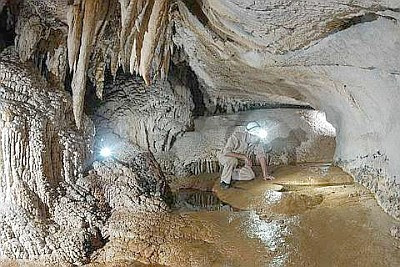
One of the spectacular caves at Mulu National Park that draws visitors from all over the world.

With one of the longest networks of caves in the world, the Unesco World Heritage site is bestowed with a long list of superlatives. It houses the world’s largest underground chamber – apparently, you can squeeze in 40 Boeing 747 airplanes in the Sarawak Chamber.

The world’s biggest cave passage, the Deer Cave can fit cathedrals the size of Saint Paul’s in London and is where you can watch millions of bats swarming out at dusk. Then there’s Clearwater Cave, the longest cave in South-East Asia.

“Many caves have spectacular formations and are home to a wide variety of cave fauna,” says Price.

The adventurous can opt for adventure caving where you crawl, climb, scramble or squeeze through narrow cave passages while marvelling at the spectacular formations and creatures. -- The Star


Unique stromatolites in Deer Cave will encourage research
By Zora Chang
Tuesday July 26, 2011


The discovery of a unique type of freshwater stromatolite in Deer Cave at the Gunung Mulu National Park will open doors for research on the mineral deposits and exploration in other caves.

Researcher Prof Joyce Lundberg from the Department of Geography and Environmental Studies of Carleton University in Ottawa, Canada, said the stromatolites found near the northeastern entrance of the cave were the only sample of their kind in the world.

“It will also be a tourist attraction for Deer Cave, which is already famous for its huge passages and vast bat population,” she said at a public talk entitled “Freshwater Stromatolites in Deer Cave, Sarawak — A Unique Geobiological Cave Formation” here recently.

World’s first: Lundberg showing a piece of stromatolite during the talk at the Sarawak Museum.

The talk also featured Prof Donald A. McFarlane of Claremont Colleges in Claremont.

Lundberg said since these type of stromatolites were being studied for the first time in the world, there was no one who could say whether the mineral deposits had any medicinal value or if weather patterns had a hand in forming them.

Stromatolites are laminated, usually mounded sedimentary fossils formed by layers of cyanobacteria, calcium carbonate and trapped sediment.

They are present as horizontal shelves arranged in a series on a steep rock face that is vertically under a guano-laden shelf.

The rock face undergoes active dissolution from acidic guano drainage water and from aggressive rainwater from an overhead discharge.

It is corroded by the running water except for the parts protected by the stromatolites, creating a form-like tiny pillars or hoodoos.

The stromatolites grow upwards in annual laminae but are, at the same time, destroyed from underneath by biological corrosion and laterally by mechanical breakage.

A dynamic equilibrium is established between upward accretion of the fresh surface and destruction at the base such that the base of the stromatolite moves over time.

Therefore, over time they climb up the wall. -- The Star


Mulu walkway is longest ever at 480m
Monday July 25, 2005

MULU: The Mulu National Park has opened the world’s longest canopy skywalk, a 480m walkway suspended 20m above the forest floor.

Experts advised and helped the local communities design and build the structure.

The canopy skywalk is part of the Gunung Mulu world heritage area opened by Chief Minister Tan Sri Abdul Taib Mahmud yesterday.

Other facilities there include a plants-for-life trail, an 8km non-slip plank walk, radio communication systems, interpretive signage, renovated facilities at Camp 5, new public toilets and upgraded facilities for future on-site research.

Also built were new bridges, new park lighting and sensor-activated lighting in the four caves – the Clearwater, Wind, Deer and Lung Caves.

The Deer Cave boasts the world’s largest cave passage while the 107km Clearwater Cave is the longest in South-East Asia.

Mulu also has the world’s largest natural chamber – Sarawak Chamber – which can accommodate 40 Boeing 747 aircraft with room to spare.

The Mulu National Park has seen a significant increase in tourist numbers after it was made a Unesco world heritage site five years ago.

State national parks and nature reserves controller Datuk Cheong Ek Choon said the new facilities at Mulu Caves were fine examples of the private sector and government working together to promote eco-tourism and biodiversity conservation.

He said it was made possible through the joint efforts of Borsarmulu Park Management and Sarawak Forestry.

Cheong, also Sarawak Forestry managing director, commended the state's commitment to conserve more areas as national parks, nature reserves and wildlife sanctuaries, and its contribution to raise the profile of the Mulu National Park on the world stage. -- The Star

Jul 21, 2011

Nepenthes Pitcher Plant in Sarawak

Nepenthes Pitcher Plant in Sarawak

A rajah among pitcher plants
By Joshua Hendry
Thursday July 21, 2011


Borneo is home to some curious-looking plants such as the foul-smelling Rafflesia and several species of pitcher plants.

Not only does the world's third largest island boasts the biggest flower in the world (the Rafflesia), Borneo is also home to the magnificent Nepenthes rajah, a species of pitcher plant which produces beautiful large pitchers.

Unless you have a keen interest in odd-looking plants, perhaps you may not be familiar with the carnivorous pitcher plants of Borneo.

Whopper: Herman with the giant 'Nepenthes rajah' pitcher which has a volume of about 1.75 litres of water and measures 41 cm long.
Whopper: Herman with the giant 'Nepenthes rajah' pitcher
which has a volume of about 1.75 litres
of water and measures 41 cm long.

There are over 100 known species of pitcher plants of the family Nepenthaceae found in the world. About 30 species are found in Borneo of which some are endemic to the island and found nowhere else in the world.

Nepenthes rajah is one such species and found only in Sabah, its giant pitchers are a subject of fascination. Together with Nepenthes attenboroughii from the Philippines, Nepenthes rajah produces some of the largest pitchers found in the genus. Pitchers exceeding 30cm tall and holding well over one litre in volume are commonly found on large, healthy plants.

Recently, a group of nine consisting members of the Sabah Society conducted a field exploration up on the slopes of the Mesilau Mountain Garden at Kinabalu National Park, Sabah.

The group included renowned botanists Anthony Lamb and Anthea Phillipps, a husband-and-wife team who authored the book Pitcher Plants of Borneo (2008) with Ch'ien Lee as co-author.

It was a very fruitful morning as the group came upon many healthy Nepenthes rajah pitcher plants. Some of the plants produced huge pitchers that measured between 35cm and 40cm long.

Cool water: A beautiful mountain creek.

The longest pitcher found that day was stumbled upon after some searching among the bushes.

Nearly hidden from sight was a giant pitcher measuring a whopping 41cm long. The longest Nepenthes rajah pitcher ever recorded in published literature is 35cm.

This means the newly discovered 41cm giant is the new record holder for tallest pitcher ever measured for this particular species. Measurement is taken from the base of the pitcher right to the base of the lid at the top of the pitcher.

Although the pitcher was already dead, it was still an important discovery and preservation of the pitcher was warranted.

The pitcher was collected for further study after obtaining permission from park representative Herman Kunsian, who was with the group the entire time. Down at the Mesilau Nature Centre, the pitcher was found to hold about 1.75 litres of water.

According to Phillipps: “What we collected was the tallest or longest Nepenthes rajah pitcher so far recorded (in published literature), not the largest in terms of volume. The most established record for volume is two litres, but there is an unverified report of 3.5 litres. It could exist, but would be absolutely huge.”

It was not just the discovery of the giant pitcher that caused a flurry of camera clicks and loud excited chatter that morning, many rare slipper orchids were also found to be blooming.

Beautiful: Yellow Rhododendron is grown just outside the Mesilau Nature Centre. Kinabalu Park is home to many Rhododendron species, some found nowhere else in the world.
Beautiful: Yellow Rhododendron is grown just outside
the Mesilau Nature Centre. Kinabalu Park is home to many
Rhododendron species, some found nowhere else in the world.

In just one small area, about 10 flowering Paphiopedilum hookerae (slipper orchids) were discovered and photographed. This exotic species with its green mottled leaves is well camouflaged among the thick undergrowth.

Both Nepenthes rajah and Paphiopedilum hookerae are endangered species rapidly disappearing from the wild due to habitat loss and illegal collection.

Unfortunately, a landslide recently occurred in the mountain garden, burying and killing many plants that grew on the slope.

While natural disasters such as landslides are often unpredictable and difficult to prevent, human actions on the other hand can be controlled.

As such, everyone should reduce activities that contribute to the decline of our environment and assume more active roles in preserving our surroundings. This is to ensure that all may enjoy the beauty of nature preserved in perpetuity.

The Sabah Society is a non-profit organisation founded in 1960 with the main aim of promoting conservation of Sabah's natural heritage. For further information, visit thesabahsociety.com. -- The Star News

Jul 10, 2011

Rainforest World Music Festival 2011

Rainforest World Music Festival 2011 will be held from July 8-10 at the Sarawak Cultural Village in Kuching bringing together some of the world’s most electic performers in the world music scene. A sneak preview of the bands will be held at Taylor’s University Lakeside Campus today. For details, call 03-2080 8305 (Angel Ng).

May 4, 2011

Homestay programme in Kampung Melayu Tebakang, Sarawak

Homestay programme in Kampung Melayu Tebakang, Sarawak

Refreshing rural experience
By Reen Reira
Wednesday May 4, 2011


A place where rivers are clean, air is fresh and the greens are greener.

10 families have set up a homestay programme in Kampung Melayu Tebakang, Sarawak, to provide visitors a feel of the traditional Malay village.

It is the latest eco-tourism destination managed by the state’s Urban Development and Tourism Ministry.

The place to be: Crystal clear water awaits tourists and locals alike.
The place to be: Crystal clear water
awaits tourists and locals alike.

It offers an excellent opportunity to experience the exotic culture, warmth and hospitality of the villagers along with nature at its best.

The village has existed since the beginning of the 18th century after its initiation by a merchant and scholar named Haji Laer, who came from Kampung Bintangor in Sarawak.

The name Tebakang is from Sungai Tebakang which flows by the village.

During a war between the Netherlands and Indonesia, a small group of Melayu Sambas migrated to the village and helped its population to increase.

Home sweet home: One of the homestay houses in Kampung Melayu Tebakang.

In the 1920s, when Sarawak was under Rajah Brooke’s rule, a representative from Kampung Melayu Tebakang known as a native officer was appointed to manage the Ulu Sadong area.

While native officer Abang Samsudin Abang Matusin was in charge, a mosque on a hill adjacent to the village was transferred to the village.

Sekolah Atap was then established in the village and was known as the Combined School. It is now known as Sekolah Kebangsaan Tebakang.

The homestay was started in 2009 with 10 operators.

Welcome sight: Kampung Melayu Tebakang’s very own cafe.

Kampung Melayu Tebakang chairman Pauziah Mohd Yussup said that nine more people had passed a basic homestay course and would join in the programme.

The two-day, one-night package costs RM130 and includes basic facilities and three meals per day.

Traditional games, rafting, picnics, barbecues and other activities are also offered.

Pauziah said the Ministry of Tourism had allocated RM200,000 to build a concrete jetty and a tourist information centre.

"We hope the toilet and bathroom facilities of the houses in the programme will be upgraded.

"We also hope that the ministry will accept our proposal to build a multi-purpose hall in the village, which has been growing from year to year.

One of the draws: This suspension bridge never ceases to attract visitors.
One of the draws: This suspension bridge
never ceases to attract visitors.

"The upgrading can attract more people, and this can help the state and country to earn tourist dollar," said Pauziah.

Kampung Melayu Tebakang is a unique Malay village that has a clean, green environment and not exposed to pollution.

Location of Kampung Melayu Tebakang

It is located in Serian District, about 80km from Kuching, and takes only a one hour to reach from the city.

It has amazing natural beauty and offers unique cultural activities.

The population of 2,000 is predominantly Bidayuh and Malay.

The village is divided by the Sadong River. The settlement on the bank reached by the main road is named Kampung Bidayuh Tebakang while the one on the other side of the river is Kampung Melayu Tebakang.

In 1929, during the era of Charles Vyner Brooke, Fort Tebakang was built as an administrative centre near the village.

This is the life: Visitors enjoying their food by a stream.

The Tebakang area has some striking limestone hills with vertical cliffs.

While the older generations were mostly farmers, the village youths now work in government departments and the private sector.

Farming and the planting of trees and vegetables provides resources for the village.

Among the crops are pepper, rubber, cocoa, rambutan and durian.

There is also the cultivation of padi huma and normal padi.

Some villagers raise fish on a small scale while others raise it commercially in freshwater ponds.

Various types of fish are raised, one of which is the red tilapia.

The village has infrastructure such as sundry shops, school and mosque.

The accommodation facilities for the homestay comprise clean rooms with fans, common bathrooms and toilets, electricity and basic amenities.

Upon arrival, guests are welcomed with the beat of kompang played by the locals.

Among the activities are rafting or kayaking down the Kayan River, longboat river safari, fishing, trekking, farm activities, picnic in Kerangan and making local delicacies such as kuih jala, ragi and ayam pansuh.

There is also a package for visitors to see a traditional Malay wedding and dances for visitors to participate in.

Those interested in arts and crafts may see how furniture is made and carved with motifs.

Pauziah said that many students from abroad and local universities had participated in the homestay.

"Last year, 35 students from UiTM in Shah Alam, Selangor, stayed in the village under the Program Explorasi Bumi Kenyalang while 120 students from Unimas joined in under the Program Rakan Muda Wawasan Desa," said Pauziah.

Those interested can experience what life is like in a Malay community.

The villagers are ever ready to welcome and show visitors their way of life, which has been practised for a very long time.

For more information on the homestay programme in Kampung Melayu Tebakang, Sarawak, call Pauziah at 082-874 263 or 019-858 2078 or send email to pauziahhail@yahoo.com

Jul 12, 2010

Rainforest World Music Festival 2010

Rainforest world music fest exposes Sarawak’s diverse cultures
By Yu Ji, Photos by Zulazhar Shelee and Andre Oliveiro
Monday July 12, 2010


THE Rainforest World Music Festival never fails to entertain.

After four days and three nights of performances, there’s little to fault organisers.

Sure, there were reports in the local media of poor promotion and slow ticket sales during the run-up to this year’s event, but last minute sales and discounts proved rather successful.

In the end, what really became a problem was transportation, due to the capacity crowds, especially on Saturday.

Drummer boys: Farafina artistes keeping the crowd thrilled with a variety of songs and beats.

Queues for shuttle vans back to Santubong Resort, about 3km away, the only place where public parking was allowed, were long.

Some attendants waited more than an hour for the service. Outside of minor issues like this, the festival has been growing from strength to strength.

Allround praises should go to former Sarawak Tourism Board chief executive officer Gracie Geikie for her feat, while the present CEO Datuk Rashid Khan’s efforts and ideas for future events are encouraging.

Drum beats: Leila Negrau from Reunion Island beats on a drum to accompany the music.

The annual Rainforest weekend at the Sarawak Cultural Village incorporates not just music but also an arts and craft bazaar. It provides revellers another venue to learn about Sarawak’s many indigenous cultures.

Already there are plans for a food festival to be held at Kuching next year, which could last up to one week, taking place immediately after the music fest.

But the musical event will continue to be promoted as the main draw.

With the conclusion of the 13th edition last night, over 10,000 tickets were sold over the three-day event, while total attendance was estimated at 20,000.

As the largest annual music fest in Sarawak, and indeed Malaysia, the event attracts the kind of audience, who come with the right intentions.

While these are mostly youths, the festival has built up a strong reputation as a family event. Every year, college students can be seen dancing alongside their parents and grandparents.

The key to the festival’s success has always been its emphasis on celebrating diverse cultures.

French beat: Minuit Guibolles from France playing the bagpipe while a traditional dancer accompanies him.

The band line-up features everything from the percussions of Africa to slower, meditation-like pieces by Iranian musicians. Twenty groups from around the world had participated in the festival this year.

There is a sense of celebration and openness at each year’s event, which seems harder to come by within the confines of cities like Kuching or Kuala Lumpur.

In terms of business, the festival is incredible value for money.

According to Rashid, the weekend cost about RM2mil to organise but the spin-off revenue is estimated to be more than RM20mil.

Media exposure of roughly RM10mil is the “icing on the cake”, Rashid added. More facilities are also being constructed at Sarawak Cultural Village and would be ready by next year’s event.

There are even plans to live-webcast the series of concerts over the internet, he said.

Next year’s festival will be held on the second weekend of July.-- The StarMetro

Apr 29, 2010

Sarawak River Cruise

Sarawak River has witnessed some great events such as when it welcomed Sir James Brooke's ship, the Royalist about 100 years ago. It was also the start of the White Rajah rule. So why not give this river cruise a try!

Sarawak River cruise promises a memorable experience for visitors
By Rintos Mail
Photo By Zulazhar Sheblee
Thursday April 29, 2010


BE IT a leisurely sunset cruise, a starlight cruise party, a romantic wedding party or a corporate function, a cruise along Sarawak River from the Kuching Waterfront on board the mv Equatorial promises a memorable experience.

If you happen to be in Kuching, the Sarawak River Cruise is not to be missed. It's a fantastic way to look at and experience the history of Kuching.

Cruising along Sarawak River, the main artery around which Kuching has grown, one will sail past the city's historical landmarks and get unique insights and views of all aspect of traditional life by the river and the city.

Romantic: A sunset view from the ship during the cruise.

While enjoying sumptuous meal on board the 120 feet by 20 feet vessel, one is entertained by the sweet sound of the sape – a traditional Orang Ulu musical instrument.

One may also choose to enjoy other on-board entertainment such as karaoke and piped music.

The double-decker mv Equatorial can accommodate up to 200 persons at any one time. The lower deck comprises an air-conditioned dining lounge, a mini bar and washrooms, while the upper deck has a sheltered sightseeing deck with an open-air performance stage.

Layar Warisan Sdn Bhd, which took over operations of the mv Equatorial in 2008, said the vessel had gone through a complete re-branding to provide a wide range of cruising experiences and improved service quality.

"We have boosted the cruise experience by introducing an interesting historical commentary and traditional cultural performances in full costume.

On-board entertainment: An Iban maiden and a warrior performing a cultural dance during the cruise.
On-board entertainment: An Iban maiden and a warrior
performing a cultural dance during the cruise.

"The ship's interior has been completely renovated, establishing a new standard of luxury in river cruising. It provides a great venue for weddings, corporate and state events, and community activities," said managing director Fiona Marcus Raja.

In addition to the daily sunset cruise, she said that brunch, lunch and dinner cruises were on offer on the sky deck or at the new Mariner Lounge below.

"Our chartered business features a myriad of events such as Mother's Day, Father's Day, Christmas dinner cruises, educational tours for schools and teaching the younger generation about history and the importance of tourism in Sarawak," she added.

Marcus said the ship hosted governments and corporate functions as well as private events, including birthday parties and wedding anniversaries.

"Many couples have been married on board. In fact, we believe we offer the most romantic wedding setting in Kuching," she said.

Her dream is to make the cruise a must-have activity for visitors in Kuching.

"I think we have come a long way in achieving the dream," she added.

Magnificent view: The State Legislative Assembly building captured during the Sarawak River cruise.
Magnificent view: The State Legislative Assembly building
captured during the Sarawak River cruise.

Over the past 20 years, cruising on the mv Equatorial offered tourists a rich panoramic view of the city centre, its famous landmarks and splendid setting.

On the cruise, passengers would follow the path of the first White Rajah, Sir James Brooke, when he sailed up Sarawak River on that historic day in August 1838, she said.

Among the landmarks seen on the cruise are the Astana built in 1870, Brooke Dockyard (1912), Kuching State Mosque (1847). Down river are the Old Court House (1874), Square Tower (1879), Main Bazaar (1864), Chinese Museum (1912), Fort Margherita (1879) and the Malay villages of Kampung Boyan and Kampung Surabaya (1860).

Layar Warisan has 18 full-time and four part-time staff members working on shift on the mv Equatorial. -- The Star Metro

Apr 14, 2009

Sarawak in Astro spotlight

Sarawak in Astro spotlight
Tuesday April 14, 2009

MIRI: Astro’s Travel and Living Network will be featuring tourism documentaries on northern Sarawak soon, a move that is expected to draw more tourists to the region.

The network will be giving prominent coverage to Miri, Unesco World Heritage Site Mulu National Park, the highlands of Bario and Ba’kelalan and other destinations in the area in conjunction with the Miri International Jazz Festival 2009 on May 9-10.

Sarawak Tourism Board chief executive officer Gracie Geikie said Astro had helped to facilitate the arrangements for the coverage.

“Travel and Living will highlight the jazz festival and air documentaries on the various places of interests that northern Sarawak has to offer, even after the festival is over.

“This will be very important for us as it will give worldwide publicity to northern Sarawak and encourage more foreign tourists to visit.

“We will continue to promote Sarawak via as many channels as possible despite the difficult economic situation. With such publicity, we expect tourists to continue visiting us,” she said, adding that the board had arranged various tour packages for tourists when they come to northern Sarawak.

The jazz festival will be held at Miri Parkcity Hotel, which faces the South China Sea on the outskirts of the city.

Geikie said the board was hoping to attract an audience of 8,000 for the two-day jazz event, adding that more than 3,000 tickets had been sold so far. -- The Star News

Jul 6, 2008

Honeymoon bliss

Honeymoon bliss
Sunday July 6, 2008
Compiled by Faridah Begum


Honeymooning domestically is just as good as doing so abroad.

Bukit Tinggi, Pahang

Colmar Tropicale Berjaya Hills Bukit Tinggi, Pahang.

None can compare to the French influenced Colmar Tropicale, which is only about an hour’s drive from the capital city of Kuala Lumpur and boasts of not just a setting but the ambience is not unlike the real towns of France that it emulates. Perfect for a weekend or just a short honeymoon, it is sure to appeal to the hearts of newly-weds for a repeated honeymoon trip.

Cameron Highlands, Pahang

Strawberry Park, Cameron Highlands, Pahang.

The highlands offer honeymooning couples a great English setting. Not having to fork out thousands to get to the outskirts of London, you can enjoy afternoon tea, cool weather and many cold evenings together with good steamboats and Continental meals at most restaurants here.

The Andaman, Langkawi, Kedah

The Andaman, Langkawi, Kedah

Situated in the picturesque Datai Bay, honeymooning couples will find the tranquillity a great help in keeping the romance burning. Lots to do with the natural setting such as bird watching, sunsets and even a round of golf if either one or both are enthusiasts.

Serai di Lanjut, Pahang

Serai di Lanjut, Pahang

If a timeless holiday is on the cards, then this place is just right. Away from the hustle and bustle of city life coupled with the slow and easy pace here, one can just stretch out on the white sandy beaches for hours on end or play a round of golf or even go river fishing.

Pulau Perhentian, Terengganu

Many couples have met on scuba diving trips and this can account for quite a percentage of marriages. It is only right and perhaps understandable if they choose to go on a scuba diving honeymoon, especially where they first met. Pulau Perhentian may be the place or even a good alternative. Known as one of the best diving posts in the country, Pulau Perhentian is actually made up of two islands, namely Pulau Perhentian Besar and Pulau Perhentian Kecil.

Pangkor Island Resort, Pangkor, Perak

Look forward to sunset cruises, traditional Malay massages and lots of time together in the beautiful resort that was voted the best in the West Coast. With a private beach exclusively for guests of the resort, you can plan many outdoor activities such as jungle trekking, archery, parasailing and cycling.

Permai Rainforest Resort, Kuching, Sarawak

Permai Rainforest Resort, Kuching, Sarawak

If your wish is to have a taste of everything, then this is the perfect getaway for you. You get a package of the sun, sea, beach, mountains, waterfalls and modern facilities all in one place. Just 30 minutes from Kuching, you will want for nothing except more time to do all the things you want together as a couple, and more.

Tanjong Jara, Terengganu

Tanjong Jara, Terengganu

Noted for its pristine turquoise waters and its hidden location, there are lots that a honeymooning couple can do here. For one, it boasts of a good spa, just right for a couple that has gone through the mill with the preparation of the wedding and the crush of relatives. It also provides the couple a chance to be just by themselves and enjoy their newly entwined lives together.

Pulai Springs Desaru, Johor

Pulai Springs Desaru, Johor

Designed like an ancient Malay palace, Pulai Springs is on one of the unspoilt beaches south of the East Coast in the peninsula. Like most resorts, it promises the excitement of a beach resort yet maintains a calm and serene atmosphere that is conducive for honeymooning and gives couples time to acquaint themselves further besides enjoying the array of activities available here such as golf and jungle trekking, and with an untouched forest that casts a romantic glow in the evenings.

Nexus Resort Karambunai, Sabah

Nexus Resort Karambunai, Sabah

Winner of many prestigious awards, this place has been described as heaven on earth with its natural setting and the numerous activities that come with it. A lagoon park fulfils one’s desires of water games and the 30ha nature park within the resort gives honeymooning couples hours of trekking together.

-- The Sunday Metro

Dec 10, 2007

Borneo Highlands Resort, Kuching, Sarawak

Borneo Highlands Resort promotes back to basics theme
By Sharon Ling
Monday December 10, 2007


The Borneo Highlands Resort, an eco-friendly development in the Penrissen Range near Kuching, is reinventing itself as a “back to nature” destination.

The resort, which boasts an 18-hole golf course among other attractions, is currently undergoing renovation to improve its hotel and other facilities.

Bigger and better: A room decorated in the ‘back-to-nature’ theme. This is what the rooms will look like after the renovation.


Borneo Highlands Resort chief executive Loh Leh Ching said they would be increasing the size of guestrooms in the hotel.

“At the moment we have 55 rooms which are quite small, so we are renovating the hotel to make the rooms bigger.

“When completed, it will have 30 rooms in different categories such as deluxe and suite,” he said during a media tour of the resort recently.

Much to see and do: Visitors and resort staff heading back to their vehicle after looking across the border to Indonesia at the Kalimantan viewpoint (above) and (below) a landscaped flower garden. and rabbitrearing area.

Borneo Highlands Resort garden grounds

He added that the guestrooms would be decorated according to a nature theme, while the resort’s jungle spa would also be renovated to make it more natural.

“In the past we had a golf concept for the resort but now we are going back to nature. We want to promote a ‘back to nature, back to basics’ lifestyle,” Loh said.

Besides the RM3mil renovation, the resort is upgrading its access road and installing electricity cables at a cost of RM8mil each.

All upgrading works are expected to be completed by April.

Natural beauty: A rocky mountain stream at the resort (above) and (below) the resort offers plots of land for bungalows amid the mountains and jungle of the Penrissen Range.


Borneo Highlands Resort also recently launched Phase 4 of its Rainforest Haven bungalow lots.

Dubbed Swan Lake Forest, Phase 4 comprises 46 lots dotted around the contours of the resort, each with a different mountain and jungle view.

Loh said there were plans to introduce the properties to the international market next year with a projected price of up to US$200 (RM676) per square foot.

Time for a dip: This waterfall is one of the scenic points on the way up to the resort.


“For the past two years, our records have shown that the minimum selling prices of our properties have increased by 90% from RM38 to RM72 per square foot.

“With our foray into the international market, we are projecting to hit US$200 per square foot,” he said.

Located about an hour’s drive from Kuching, the resort is set amidst jungle-clad mountains near the Indonesian border at about 1,000m above sea level.

Guests can look across the border into Indonesia, which lies below a cliff drop of 600m at the resort’s Kalimantan viewpoint.

Other attractions include flower gardens, a horticulture nursery, Chinese tea house, rabbit park and jungle waterfall. -- The Star Metro.